Hire in North America: 6 country guides and EOR rankings
Every guide below lists what an employer pays on top of salary, what the EOR providers charge, how long the first contract takes and which providers rank best for that country. Same fields on every page, so you can compare two countries line by line.
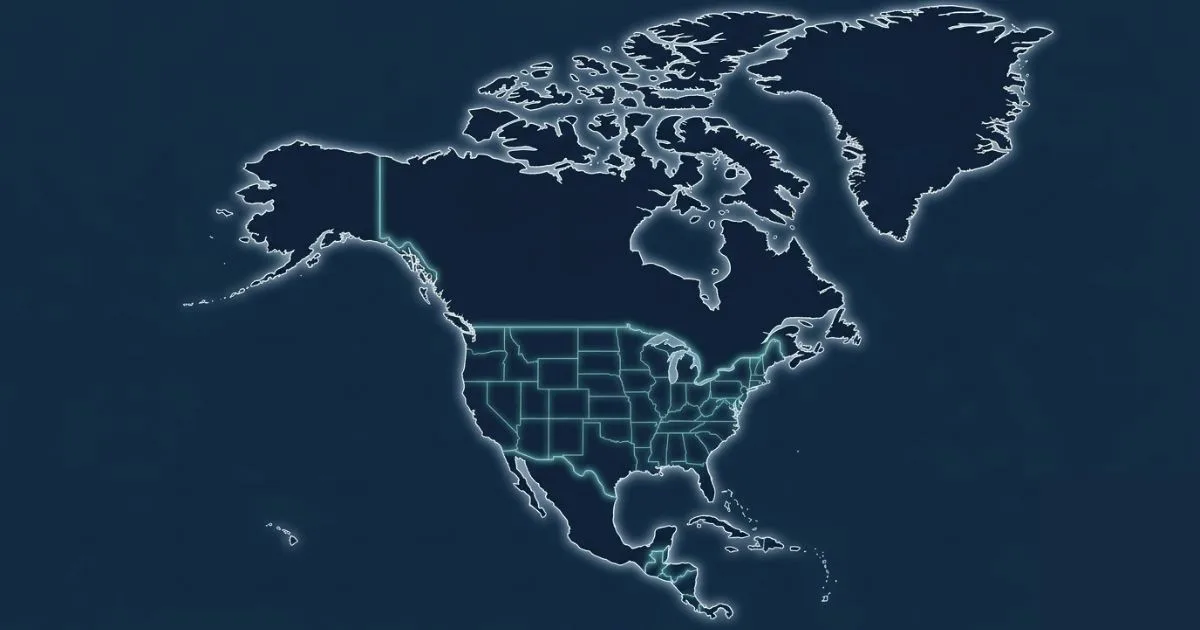

Employer costs in North America, country by country
Contributions as a share of gross salary, the EOR fee per employee per month as published by the providers, and the time to the first contract once the documents are in. Each row links to the full guide and to the ranking.
| Country | Employer on-cost | EOR fee | Income tax | First contract | Guide |
|---|---|---|---|---|---|
 Canada | 8-12% | $400–700/mo | 14–33% federal + provincial | 1-3 Days | GuideTop 10 |
 Costa Rica | 27-29% | $400–700/mo | 0–25% progressive | 3-7 Days | GuideTop 10 |
 Mexico | 22-27% | $400–600/mo | 1.92–35% | 3-5 Days | GuideTop 10 |
 Panama | 15-20% | $400–700/mo | 0–25% progressive | 3-7 Days | GuideTop 10 |
 Trinidad and Tobago | 10-11% | $400–700/mo | 0–30% progressive | 3-7 Days | GuideTop 10 |
 United States | 7-15% | $500–900/mo | 0–37% + state | 1-2 Days | GuideTop 10 |
What changes when you hire across North America
The 6 guides in North America put employer contributions between 7% (United States) and 29% (Costa Rica) on top of gross salary. Published EOR fees run from $400 to $900 per employee per month, before any setup fee.
Six countries, six systems. In the United States the cost of an employee depends on the state (unemployment insurance, workers' compensation, paid-leave laws), so an EOR quote without a state is not a quote. In Canada the provincial standards act and the Quebec payroll regime decide notice and deductions. Mexico is the one to read twice: since the 2021 outsourcing reform supplying personnel to another company is banned and a provider of specialised services must be registered with the labour ministry (REPSE), and a client paying an unregistered provider loses the tax deduction on the invoice and shares the fine. Ask for the registration number, then check it on the public register. Costa Rica puts about 27% on the employer through the CCSS contributions, plus the aguinaldo, a thirteenth month paid in December. Panama pays its thirteenth month in three instalments (April, August, December), and the 2025 CSS reform raises the employer rate again in 2027. Trinidad and Tobago collects NIS by weekly earnings class, 16.2% of insurable earnings in 2026 with two thirds on the employer, and owes severance only on a retrenchment.
Find a better EOR — without risk
Compare EOR providers to gain insights on cost, coverage, and contract flexibility, ensuring compliance and payroll continuity.